
Dance tights are a non-negotiable part of every dancer's kit. Whether your daughter is just starting ballet or has been training for years, knowing the different types of dance tights helps you buy smarter and avoid the wrong purchase for the wrong class. This guide breaks down the main styles, when to wear each one, and what to look for.
Why Dance Tights Matter More Than You Think
Tights do more than look neat. They absorb sweat, reduce friction, and keep legs warm before a proper warm-up. They also protect the skin during floor work and help teachers see leg lines and footwork clearly. Getting the right type means your dancer is comfortable, supported, and class-ready from the first minute.
If you are new to dance and still figuring out the full kit list, our guide to what kids should wear to dance classes is a great place to start before you shop.
The Main Types of Dance Tights
Not all tights are the same. Each style serves a different purpose, and many dancers own more than one type depending on their training schedule.
Footed Tights
The most common style for ballet and classical training. Footed tights cover the full leg and foot, giving a clean, polished look that teachers and examiners expect. They work well with ballet slippers and character shoes. Look for a high-stretch fabric that sits smooth against the leg without bagging at the knee or ankle.
Footless Tights
Footless tights stop at the ankle or mid-calf. They are popular for contemporary, jazz, and lyrical classes where bare feet or jazz shoes are worn. They offer the same coverage and warmth as footed styles without bunching inside shoes. A great all-rounder if your daughter does multiple styles in the one week.
Convertible Tights
Convertible tights have a small hole in the sole of the foot. The foot fabric can fold up so the tights function as either footed or footless, depending on the class. Ideal for dancers who move between ballet and contemporary in the same session. One pair does the job of two, which is practical and easy on the budget.
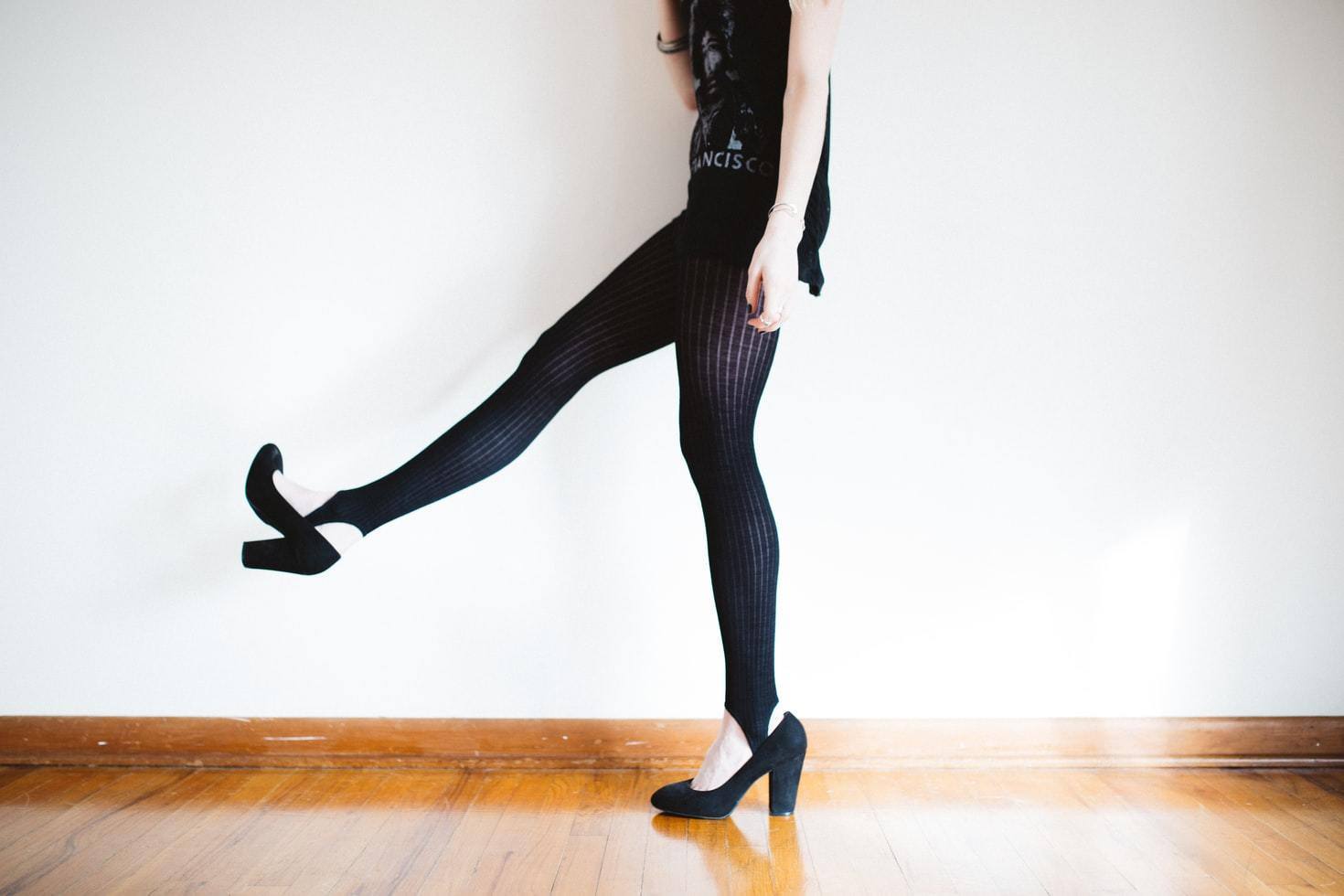
Canvas or Stirrup Tights
Stirrup tights have a strap that runs under the foot, leaving the heel and toe exposed. They suit jazz, musical theatre, and commercial styles. The open design works well with heeled character shoes or jazz shoes that need a close fit. Less common in junior classes but worth knowing about as training progresses.
Transition or Shimmer Tights
These are typically worn for performances and exams rather than everyday training. They come in a sheer or satin-finish fabric that catches stage lighting beautifully. Delicate compared to training tights, so keep a separate pair just for performances to make them last.
Choosing the Right Colour and Fit
Most studios specify a tight colour as part of their uniform. Ballet schools typically require pink or skin-tone tights. Jazz and contemporary classes may allow black. Always check with the studio first before buying.
Fit matters as much as style. Tights that are too small roll down at the waist and restrict movement. Tights that are too large bunch behind the knee and look untidy. Use the brand's size guide and measure your daughter's height and weight rather than guessing by age. Proper sizing is especially important for younger dancers. For tips on dressing little ones correctly from the start, our article on getting your toddler dressed for dance lessons covers the basics clearly.
What to Look for in Dance Tight Fabric
Not all fabrics perform the same on the dance floor. Here is what to prioritise.
- High stretch and full recovery so tights spring back to shape after class.
- Moisture-wicking properties to keep legs comfortable during longer sessions.
- Flat seams or seamless construction to avoid irritation during floor work.
- A reinforced gusset for durability, especially for active training schedules.
- Colourfast fabric that stays true wash after wash without fading.
Avoid regular fashion tights for dance. They pill quickly, lose their shape, and do not give the coverage or movement a real class demands.
How Many Pairs Does Your Dancer Need?
For weekly classes, two to three pairs is a practical minimum. It allows time for washing and drying between sessions without scrambling on class day. If your daughter trains multiple days a week, four pairs keeps the rotation easy and organised.
Keep at least one pair specifically for exams and performances. Wash them by hand in cool water and air dry flat to protect the fabric.
If you are sorting out a full dance wardrobe and wondering what else belongs in the bag, the women's guide to dressing for different dance styles is a helpful read for older dancers stepping up their training.
Shop Dance Tights Made for Australian Dancers
Pink Lemon tights are designed and made in our Melbourne factory. Every pair is built for real training conditions, with stretch, comfort, and durability at the centre of every decision. Browse our girls studio dance class essentials to find the right tights, leotards, and accessories for every style your daughter loves.


